Together with platform partners, 3D Essence Food, LeanPio, Indespan and Chemometric Brain, they will present innovative solutions in nutritional bakery solutions, personalized nutrition, food surplus utilization, waste management and digitized food quality software among others.

Blendhub will be present again at Food 4 Future, May 16-18 in Bilbao, Spain. Being the leading food tech event in Europe, latest trends and innovations that are transforming the food industry will be presented.

Blendhub is official sponsor of the event and will participate with a booth hosting some of its key platform members. The aim is to show how collaboration between different stakeholders operating in the agrifood value chain can accelerate the development of a more efficient, sustainable and safe food system for consumers and the planet.

Since last Food4Future event in 2022, Blendhub has accelerated its Food-as-a-Service value proposition to facilitate entrepreneurship in the global food sector by supporting startups, SME scale ups and food industry organizations in general from idea to test, product validation and market launch of innovative food products containing powder based food ingredients anywhere in the world. This is possible due to the operation of a global network of food production hubs already covering 4 continents and a unique approach to local consumer market knowledge acquired by both physical presence and the collaboration with platform partners from around the world.

Visitors and food industry stakeholders will be able to visit a complete production hub according to the Blendhub replication model in virtual reality and discuss specific business opportunities around shared value creation on this innovative FaaS platform business model.

Interested partners and investors can also get an understanding of how new food production hubs can be deployed anywhere in the world in less than 6 months and how these new local and regional deployments of the modular and portable food production facilities can support the transition towards a healthier and equitable food system.

Chemometric Brain and their digitized food quality software which is operating as an independent module installed in all Blendhub facilities, will present their new software solutions for quality control of dairy products, powder based food ingredients, snacks and 100% acorn-fed Iberian ham, among others, and will perform real-time analysis of food samples, showing immediate results.

The platform partners will showcase some of their latest innovations for the food industry. Indespan will present a novel solution to produce bakery products with a high vegetable protein content. This new protein bread, which is already being successfully produced and marketed through Blendhub’s multi-localized network, will be part of the menu during the CEO and senior executive network lunches that will take place during the event.

LeanPio will introduce its latest eco-efficient solutions to help companies minimize waste and optimize resources; and 3D Essence Food, specialized in the use of production surpluses to curb waste and generate new foods with high nutritional value, will demonstrate 3D printing of food from these surpluses.

“With our partners we reinforce our Food-as-a-Service strategy to empower entrepreneurship and innovation in the food industry. Through our partner network and multi-localized production hubs, we help companies detect market opportunities to launch healthier, sustainable and affordable food anywhere in the world, and focus on enabling startups and SMEs to compete with large multinational food companies at the same level”

Henrik Stamm Kristensen, founder and CEO of Blendhub and Chemometric Brain.

In addition, Blendhub, Chemometric Brain and its partners will participate in the Food 4 Future World Summit, which will host high-level international speakers to discuss the challenges facing the food and beverage industry.

Blendhub – 16 May– Arena Industry Solutions – Food as a Service, a shared-value innovation model, with Joaquín Tintoré King, Head of Business Development.

Chemometric Brain – 16 May – Arena Industry Solutions – Better quality and decisions, with digitized quality control, with Jacob Kristensen Illán, VP Digital Food Quality.

Henrik Stamm Kristensen – 17 May – Main Auditorium Agrobank – Is innovation Still Relevant at Yhis moment in Time?

We offer you a business pass to the event and look forward to welcoming you at our booth, Visit us at F600 from May 16 to 18 at the BEC in Bilbao.

CODE PASS: RVBXQ

Launching a successful product from an innovative idea is no easy task. Unless you find the right partners to guide you along the way.

Blendhub collaborated with Indespan, a pioneering company in the research and development of innovative solutions in the bakery and pastry industry, from the initial idea to the market launch of a novel high protein bread in Mexico in less than 3 months.

Only on a collaborative platform model with partners who have market knowledge, technology and production experience can innovation be accelerated and new consumers reached.

Indespan designed a unique formula to create a bread with more protein, less fiber and fewer carbohydrates, made only with plant-based ingredients.

Protein bread is an ideal product for diets that seek to control weight, improve sports performance or simply increase the intake of quality nutrients. In short, this is a product with great potential in the food industry.

How to adapt this formula to the needs of today’s consumers, develop tailor-made products and identify the target markets?

In collaboration with Blendhub Spain, Indespan selected a specific bread recipe with more protein, less fiber and fewer carbohydrates to be launched in #Latam.         

With support from the professionals operating the sales support lab in Blendhub Mexico, Indespan adapted the recipe to the needs of local consumers and price point, and ended up with the development of a tailor-made product for the identified target market.

Actually, Indespan has developed a complete range of bakery products (sliced bread, baguette, bread for sandwiches or hamburgers, bagels and tortillas) and pastries (brioche, cookies or muffins).

This is the power of Food-as-a-Service and a global network of multi-localized food production hubs to help food companies accelerate innovation and launch new products anywhere in the world faster, safer and cheaper than ever before. And supported by digitized quality control with Chemometric Brain to ensure quality, product homogeneity and traceability.

This innovative protein bread was presented for lunch last week at Food 4 Future in Bilbao and has already been successfully launched in Mexico, now scoping expansion to Colombia, Brazil and other markets in Latin America and beyond.

Blendhub has been selected as one the 10 Top Innovators in the Humanitarian Impact and Resilience Challenge by  UpLink, the innovation platform for people and planet by World Economic Forum.

Blendhub was chosen for empowering employment and entrepreneurship in vulnerable communities and contributing to a positive social impact worldwide by leading the way in a global food system change.

This award recognizes many years of hard work with the objective of deploying a global network of multi localized food production hubs, digitizing food products to develop sustainable global supply chains and create a completely new offering Food-as-a-Service making healthy and affordable food and nutrition available to more people in more places.

Blendhub uses technology, data and a global infrastructure of multi-localized food production hubs to make nutritious and affordable food and personalized nutrition available to more people in more places through a collaborative platform business model. The network of Food-as-a-Service hubs, located closer to ingredients sources and/or closer to final consumers, serves to empower local communities to increase local value creation, while at the same time finding additional skills or missing parts needed to develop new food solutions from a global community of food industry companies and experts.

Our objective is to help anyone from idea to market launch of new food products containing powder-based food ingredients directly to consumers (B2C) or converted through industrial processes (B2B) into solid, liquid, or gelled ready-to-consume food products, faster, safer and cheaper than ever before – and all from sustainable global supply chains.

The Humanitarian Impact and Resilience Challenge was a global call for commercially viable and scalable private/public driven efforts that benefit the recovery of local communities that are at risk or have suffered from conflict, natural disasters and forced displacement.

The need to find new ways to help those affected by fragility, conflict, violence, extreme hunger, and natural disasters has never been as urgent. Even before the COVID-19 pandemic and the Ukrainian refugee crisis, nearly 1 billion people were living in fragile settings across the world.

While established humanitarian and development responses will remain essential as relief to acute crises, there is an opportunity to complement established approaches with market-driven solutions that provide a financially sustainable approach to humanitarian action, systemically changing our collective approach to preventing and responding to crises and fragility.

EIT Food and Blendhub launch the Affordable Nutrition Scale-Up Challenge with the aim of ensuring that more people have access to sustainable and nutritious food. Both organisations are looking for startups and scaleups that have ingredients or formulas that support the promotion of healthy and sustainable diets in Europe. EIT Food is supported by the European Institute of Innovation and Technology (EIT), a body of the European Union.

The goal of the Affordable Nutrition Scale-Up Challenge is to help bring innovative powder-based food solutions to the next level. The most promising submitted initiatives will be selected by a jury committee and up to ten winners will receive services worth €25,000 to go from ‘idea to market’. 

Solutions submitted to the challenge should seek to dramatically improve an existing recipe; find a larger formula or recipe in which the innovative ingredient could take place because it is currently under-utilised; expand to new markets by localising the recipe or further develop the category with a new range of sub-products.

Innovating all along the food supply chain – finding new raw material sources, developing alternative nutritious solutions, and achieving more sustainable and cost-effective processes – is not an easy task.

New food companies encounter barriers such as market segmentation, high development costs, lack of data to ensure success and efficient supply chains, and achieving mass-market food quality.

Blendhub’s expertise in powder-based food products, together with EIT’s demonstrated experience and international network, will help food companies surpass these innovation barriers and speed up the time it takes to ideate, test and launch a new product onto the market, delivering more nutritious, healthier, and affordable food products to consumers.

Lorena Savani, Innovation Programme Manager at EIT Food, said: “By supporting the Affordable Nutrition Scale-Up Challenge, EIT Food aims to accelerate innovation in the food industry and ensure that more people have access to sustainable and nutritious food.

“We are excited to partner with Blendhub and leverage their expertise in powder-based food products to help startups and scaleups overcome innovation barriers and bring their ideas to market. Together, we can build a future-fit food system that produces healthier and more affordable food for all.”Henrik Stamm Kristensen, Founder and CEO at Blendhub, stated: “This initiative in collaboration with EIT Foods is fitting perfectly into our collaborative food industry platform strategy and is an excellent

opportunity to demonstrate how we can help entrepreneurial people and companies taking their new food product ideas to market faster, safer and cheaper on our global network of multi-localized hubs, which we are deploying closer to raw material producers and closer to consumers supporting sustainable global supply chains and a transiting towards a circular food economy” .

“We cannot achieve this goal alone. Multiple stakeholder collaboration and transparently shared value creation is key and with this challenge we expect to open the eyes of many value-aligned professionals and companies to join the movement and transform the global food system together”.

Applications are open from 12 April 2023 to 15 June 2023.

I recently read an interesting article in Food Manufacture UK that invites all of us involved in food production to reflect.

Most importantly, when referring to food security, do we really know what it involves?

It is generally defined as the state of having reliable access to a sufficient quantity of affordable and nutritious food.

It is a different concept from food safety but there is an interdependency between both: if the food is not safe, food security is not relevant, and if there’s no food security, food safety is secondary or simply irrelevant.

The last years have revealed significant vulnerabilities in global supply chains, especially with shortages of certain food items, first due to border closures and limitation of activities due to the Covid pandemic, then the war in Ukraine, and energy and transport price increases just to mention a few.

All this is leading to an increase in food insecurity and in many cases to a complete lack of availability of food, especially in the poorer part of the world.

Climate change is another reason for the lack of food security.  There is no food if there is no fertile soil, there will be less food if we have less water and if the temperature increases, certain crops will disappear, all challenging our agricultural supply chains in multiple ways.

In my opinion, the keywords to tackle these challenges are localization and decentralization.

I will never stop insisting on this, and the reality is proving us right again and again. Since we implemented our first localized food production hub more than a decade ago in India and now have deployed a network of multi-localized production hubs already on 4 continents and growing, we are successfully helping food companies to reformulate and optimize their existing food products’ cost and quality, adapting them to local ingredients availabilities, optimizing their supply chains and even by helping them from idea to market launch of new and sustainable food products faster, safer and much cheaper than ever before. The new keywords today are speed and agility.

Localization of production is key to producing more efficiently and at a lower global cost. It empowers more value creation in local communities, contributes to reducing gas emissions, minimizes risks, and ensures the supply of healthy and affordable food and nutrition in sustainable global supply chains for more people in more places.

But food shortages also create important collaterals, especially putting food safety at risk.

When some food products become scarcer, their value increases and fraudulent activity increases alarmingly like in olive oil, honey, spices, and many other food products.

According to experts in quality control, a risk-based approach should be used to define the amount of testing to carry out. Depending on the track record and confidence of the supplier, they recommend more or fewer lab analyses.

But these same experts also recognize that external lab testing is time-consuming and costly, and therefore many times the number of samples analyzed is limited. Instead, testing in-house can ensure full control of the entire production process, and many technologies like Near Infrared Spectroscopy (NIRS) are already invented, however still heavily underutilized despite their proven results in the food industry.

We at Blendhub were pioneers in developing and adopting Chemometric Brain, a NIR-based software that allows fast and effective analysis of all raw materials and final products without the need for specialized technicians or large investments into our supply chains and global network of food production hubs. Today we use this technology to control every single batch entering, and final blended product leaving our hubs anywhere in the world. Chemometric Brain is today an independent company serving food industries in Europe, LATAM, and Africa.

As mentioned, re-formulation must be considered key to addressing the scarcity of traditionally available ingredients or ingredients being transported from far away.

Alternative and locally available ingredients should always be considered for product development, especially plant-based ingredients, or millet, which in addition to being nutritious grow in harsh and dry conditions, save water, and increase yield, and should therefore be a growing source of food.

Also exploring new ways of using surplus fresh food is a way to tackle food shortages and foster sustainable food production.

Thousands of tonnes of fresh and edible surplus are wasted every single day in the world and collaborations like the one we have been working on for more than a year with Essence Food in the development of new healthy, dried, powdered, and nutritious products from surplus food is a good example of accelerating food safety and food security through partnerships.

As you can see in Blendhub we are trying to explore solutions in many different manners to increase food security and food safety in many parts of the world but it is also absolutely clear to us that we need many more value-aligned people and companies that believe what we believe and are ready to collaborate in a transparent and accountable manner to make the accelerated impact needed to make healthy and affordable food and nutrition available to all people in all places.  

More than a decade ago at Blendhub we had the strategic vision to transform our centralized business model toward localization. This made us pioneers in 2011 when deploying our first portable powder blending unit (PPB) in India with the objective of reducing the time and costs, of buying the ingredients, blending, and packaging a specific food formulation, and supplying it to a B2B food industry customer in the Middle East. And we succeeded big time: we reduced global supply chains with +70 days, reduced inventory substantially, and saved 30% of the food product cost while at the same time reducing gas emissions due to optimized logistics.

The magic “recipe” was localization: localizing production closer to raw materials and closer to end consumers to be much more cost-efficient and operate sustainably.

Today, the context in which we live has proven us right: it was not only a good strategy to reduce costs and be more efficient for our customers. The Covid pandemic, global warming, and the increasing digitalization and automation of processes are leading to changes in the markets that demand fast and agile adaptation and market launch of new solutions.

And localization is the keyword. Localized food production facilitates local entrepreneurship, network, and consumer understanding, increases operational performance and efficiency in the food system, and this results in higher resilience and lower risks.

Visionary food producers start to see hyperlocalization as a clear way to improve the industry’s resilience and thereby take advantage of an entirely new way to become competitive while at the same time reducing emissions and lowering climate impact. 

As noted in the last Intergovernmental Panel on Climate Change report, hyperlocalization involves creating shorter supply chains and establishing or redesigning operations to allow food production to occur in the same local environment as the end consumer. With a focus on shorter, transparent, and more sustainable supply chains, localization is evolving into hyperlocalization, producing food as close to consumers as possible. The big and centralized food factories will soon be history.

Years ago, when I first raised the need to localize food production closer to raw materials and final consumers, I had to fight against the incomprehension of an industry that was still too traditional and conservative. Today, with Blendhub operating 7 plants on 4 continents and a unique Food-as-a-Service (FaaS) business model helping companies of any size to produce anywhere in the world, I celebrate that the industry is adopting hyperlocalization to produce more efficiently and sustainably, thus ensuring the supply of basic and nutritious food products to feed more people in more places.

Hyperlocalization is also about revitalizing local crops and empowering local farmers to become the new FMCG companies of this new world. A clear and recent example is millets, due to their importance as a staple food, which is usually grown in developing countries and has a huge and untapped potential in the global food industry. That’s precisely why the UN and FAO have declared 2023 the international year of millets to promote their cultivation, processing, and consumption, encouraging the different stakeholders in the supply chain to work together to exploit this potential and not just cry over the lack of traditional crop availabilities.

Two years ago, we at Blendhub took the lead in the Revaluation of the Ragi (Finger Millet) Supply Chain in India to create healthy and affordable nutrition around a highly undervalued local raw material. We are now helping farmers and entrepreneurs from idea to market removing inefficient steps and costs along the supply chain and facilitating access to healthy and nutritious novel products in a unique shared value model.

Achieving full hyperlocalization may be challenging but the absolute key is multi-stakeholder collaboration and not the one we know today where “winner takes all”. We are dealing with many different challenges at the same time including lack of supply chain transparency, food traceability, food fraud, food loss, and food waste to name a few, and all being shared by more than 500 million farmers and SMEs apart from the big multinational food industries.

Localization is a complete game changer in the global food system and the rules of how to operate and create shared value will never be the same again. It is just a question of time.

DLD Conference is Europe’s leading event on innovation, digitization, and science.

Under the motto “Beyond NOW”, the 3-day event took place last week, hosting over 1,500 thought leaders and top executives from more than 50 countries, to learn and discuss frontier technologies, the future of work, health, food, and climate action, among others.

Our founder Henrik Stamm Kristensen was one of the guest speakers and participated at the round table “Changing the Food Ecosystem” with David Bucca, CEO of Change Foods, Olaf Koch, from Zintinus, and Dr. Manon Sarah Littek, Founding Partner of Green Generation Fund, to discuss the future of food systems.

Do we have the resources to feed all people on the planet with healthy and nutritious food products using food ingredients from sustainable global supply chains? All participants agreed that transforming the global food system is one of the biggest challenges in the 21st century. It must be done by visionary and committed people and organizations from soil to mouth.

Henrik highlighted that “big conglomerates produce 20% of the world food but take 80% of the value, and have built the position on brands and superior control of historic supply chains, and that is one of the main reasons for the actual inequality in food distribution and food quality.

This was the starting point of the implementation of a distributed network of multi-localized production hubs to facilitate more efficient and sustainable food production with the purpose of feeding all people in all places.

Henrik explained: “We patented a portable plant, the Portable Powder Blending, and installed the first one in India in 2011, helping food companies launch new food products in less than 90 days, based on sustainable local raw materials, like ragi, reducing costs and empowering local entrepreneurs”.

Blendhub is now offering Food-as-a-Service, fostering transparent and accountable supply chains, creating innovative food products, digitizing food quality, and focusing on making food products accessible and affordable for consumers.

Alternative proteins were another topic of discussion. David Bucca, CEO of Change Foods, explained how technology can help innovate plant-based products and transform the future of food.

Olaf Koch, the partner at Zintius, emphasized the importance of food tech to optimize food production, especially in countries with little self-supply. And he noted that “we need to build a coalition with the people that can make this change happen”.

So did Satya Tripathi, from the Global Alliance for a Sustainable Planet: “Will we be able to make the global food system sustainable? It can only be done by building strategic partnerships, by focusing on action and we are doing exactly that empowering regenerative agriculture in India”.

In short, at the DLD Conference discussions focused on how to design a more sustainable future for the planet. The food industry is key in this transition and technology is our great ally.

Watch the full video here

The Human Resources Management Association of the Region of Murcia (DH), which brings together professionals in this field, has awarded the VI Human Management Awards. These awards recognize the work of professionals and institutions that develop and promote people management in Murcia.

Raúl Fernández Guillamón, VP of Business Services at Blendhub, received the DH CEO Award. The DH Award for Human Resources Director went to Manuel García Juesas, Human Resources Director at El Pozo Alimentación; while the DH Institutional Award went to the Faculty of Labour Sciences at the University of Murcia.

Raúl is a psychologist with a Master’s Degree in HR Management and a Master’s Degree in Business Management and Administration. He founded the company INDDEC Consultores and was managing partner. Previously, he had worked as Human Resources Director at Bioferma Murcia. Throughout his professional career, he has promoted start-up companies and management teams in four countries. He has collaborated in the creation of company culture, work models, roles and responsibilities, remuneration and results. He also has extensive teaching experience.

Passionate about how relationships and human behaviour influence business results, at Blendhub he is helping “to lead change in the food value chain to make food available to more people, in more places, in a sustainable way.”

In terms of people management, Blendhub stands out for having obtained ISO 45001 certifications in Health and Safety, promoting the third equality plan and committing to the initiative of companies free of gender-based violence.

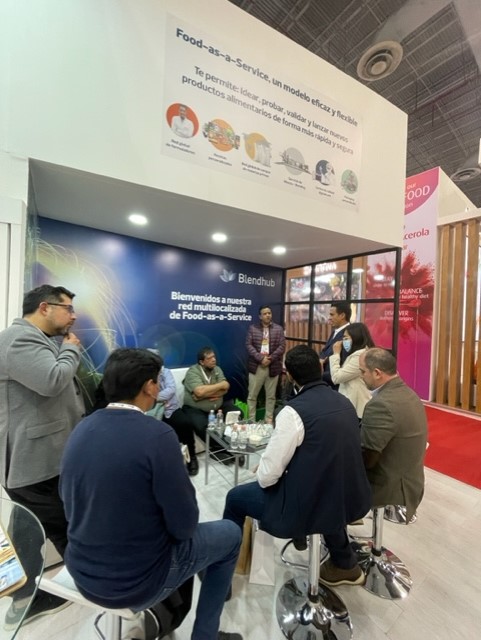
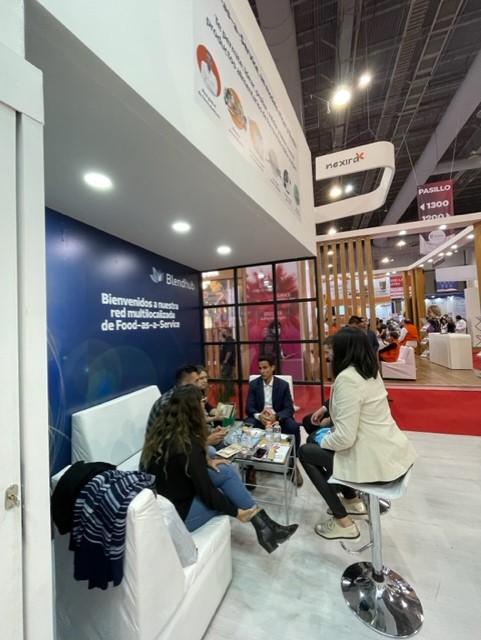
Blendhub participó la pasada semana en The Food Tech, el mayor punto de encuentro de Latinoamérica para profesionales y empresas de la industria alimentaria. Después de tres años de parón por la pandemia, la feria ha sido un éxito de público con más de 18.000 asistentes.

Los equipos de Blendhub en México y Colombia han presentado las últimas innovaciones alimentarias y casos de éxito locales e internacionales, todo ello bajo la estrategia de Food-as-a-Service, con la que ayudamos a cualquier empresa alimentaria a lanzar nuevos productos en menos de 90 días.

En The Food Tech, Blendhub ha destacado por sus innovaciones en las categorías de plant-based e ingredientes funcionales. Hemos presentado nuestra innovadora mezcla para pan proteico, bebidas naturales hidratantes en polvo, queso crema y crema ácida de origen vegetal y cereales infantiles, entre otros.

En Blendhub conseguimos dar respuesta a las nuevas tendencias de consumo globales  (salud, sostenibilidad, etiqueta limpia, reducción de azúcar, etc…) con unos productos innovadores y óptimos en cuanto a características funcionales y sensoriales, que conquistan a los consumidores por su sabor y textura.

Durante los dos días del evento, Blendhub ha consolidado relaciones con sus clientes clave en la región, salimos reforzados como plataforma tecnológica y de servicios para la industria alimentaria, líderes en innovación gracias a nuestra red de formuladores expertos en la adaptación de ingredientes y recetas a los gustos y hábitos locales en cualquier parte del mundo.

El éxito de nuestra participación en The Food Tech ha sido posible gracias a la dedicación y el compromiso de nuestros equipos en México y Colombia, que han trabajado muy intensamente en los últimos meses para preparar esta cita clave para el negocio de Blendhub en Latinoamérica.

Indian Ice Cream Expo is one of the most significant events in the global ice cream industry. Actually it is South Asia’s only gathering for ice cream manufacturers. More than 200 exhibitors from all over the world will participate and  8,000 visitors from South Asia are expected from 10 to 12 October in Hyderabad.

Blendhub will participate at this event to show customers and partners the last innovations in the ice cream and frozen desserts segments. Blendhub has more than a decade experience in developing innovative solutions for the ice cream industry in India: we are experts in creating any recipe with any ingredients anywhere. These solutions respond to the new consumer trends towards health -low fat, no sugar-, new flavors and formats… Blendhub has a network of formulators specialized in different segments of the food industry, which enables to adapt recipes to local tastes and optimize processes, achieving products with better performance, taste and texture at a better cost.

At this year’s Ice Cream Expo, Blendhub will introduce the new solutions for low fat ice creams and frozen desserts, premium ice cream and frozen desserts, Ice Candy and Lollies, Mawa Malai Kulfi (the tradicional indian ice), soft serve ice cream and sorbet, thus covering all different segments and trends within the ice cream industry.

Ice cream is currently considered to be one of India’s most popular desserts. Due to the prevailing hot and humid climate in the region, as well as the shift in customer food tastes, dessert sales are constantly increasing throughout the region.

The India ice cream market reached a value of INR 201.4 billion in 2020. The market is further expected to grow at a CAGR of 14% between 2021 and 2026 to reach a value of approximately INR 442 billion by 2026.

Blendhub has a presence in India since 2011. The company has two production hubs, one in Sri City Domestic Tariff Area (DTA), that mainly serves the domestic market and another one in Sri City Special Economic Zone (SEZ), that serves the Asia Pacific and the GCC markets. Both the hubs at Sri City are FSSC 22000 certified and have a unique patented digitized quality system which ensures highest standards of food safety, consistency and homogeneity.

Local production allows us to better understand the market and the final consumers as well as to better source local raw materials and reduce logistics costs. In this way, we can help any company willing to grow in the ice cream segment in India and Asia Pacific to launch innovative products, tailored to local tastes, more quickly and cost-effectively. Visit us at STAND E1 in Hitex, Hyderabad, India from 10 to 12 October.